
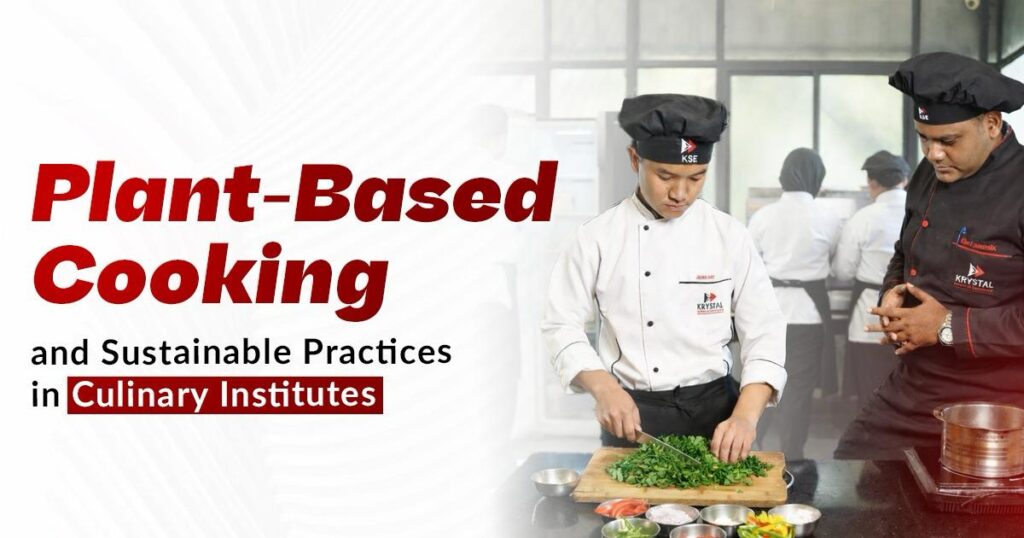
From time to time, the global culinary domain sees new trends or practices being adopted by people on a large scale. As of the present, these trends of people include culinary techniques revolving around veganism, the safety of the environment, and personal health awareness. These techniques, focusing on plant-based cooking and sustainability, are steadily making their way into the regular preferences of millions of people, hence being important enough to teach in plant-based cooking courses at culinary institutes or become a part of regular cooking courses.
What is Plant Based Cooking?
Before enrolling in a cooking course in Kolkata to pursue plant-based cooking, you should have some brief knowledge about what it is. Plant-based cooking focuses on preparing meals primarily from ingredients derived from plants such as vegetables, fruits, grains, legumes, nuts, and seeds. The key elements of plant-based cooking are:
- Use of whole or minimally processed ingredients
- Inclusion of creative protein alternatives like lentils and tofu
- Techniques to enhance flavor without relying on animal fats
- Nutritional balance through diverse food groups
What are the Benefits of Plant-Based Cooking?
The plant-based diet cooking and eating is preferred by many across the world due to a wide range of benefits. These include health, environmental, and economic benefits whose rising preference is supported by several studies. The following are the benefits of plant-based cooking, explained in detail:
- Health Advantages – Better heart health, digestion, and reduced risk of certain chronic conditions.
- Environmental Sustainability – Low use of natural resources contributes to lower greenhouse gas emissions.
- Cost Efficiency – Plant ingredients like grains and legumes tend to be cost-effective.
What is Sustainable Cooking?
As taught in the best cooking or best hotel management institute in Kolkata or anywhere across the world, sustainable cooking is defined by food preparation practices that show minimal impact on any component of the environment while supporting ethical sourcing, resource efficiency, and waste reduction. The principles followed in sustainable cooking are:
- Responsible sourcing of ingredients
- Efficient use of energy and water
- Minimizing food waste
- Supporting local food systems and communities
What are the Best Zero Waste Cooking Techniques?
Sustainable or zero-waste cooking focuses on utilizing every part of an ingredient to reduce food waste as a measure of sustainability and a cost-saving strategy. The following are the common zero-waste cooking techniques taught to students and followed to achieve the goal of sustainability:
- Root-to-Stem Cooking – All parts of vegetables, including stems, peels, and leaves, are used in dishes like stocks, sauces, or garnishes.
- Stock and Broth Preparation – Vegetable scraps are repurposed into flavorful stocks.
- Fermentation and Preservation – Techniques like pickling, fermenting, and curing extend the shelf life of products and reduce their spoilage.
- Portion Control and Menu Planning – Careful planning of the need and use of ingredients and quantity of food reduces overproduction, which is a major source of waste in kitchens.
How Do Culinary Institutes Teach Plant-Based and Sustainable Cooking?
Any culinary institute that you enroll in to learn about plant-based and sustainable cooking techniques teaches you the same with a blend of theoretical and practical approaches. The following are some of the ways of teaching these two concepts:
- Hands-On Kitchen Training – Students are taught to prepare plant-based dishes using professional techniques that involve replicating traditional flavors.
- Sustainability Audits – Students may conduct waste audits in training kitchens to identify inefficiencies and improve processes.
- Guest Lectures – Expert chefs share insights into common cooking practices through workshops and guest lectures.
Topics of Plant-Based and Sustainable Cooking in Courses
Plant-based chef training and sustainable cooking practices are taught across cooking institutes. In their curriculum, relevant topics include:
- Plant-Based Nutrition and Diet Planning – Students get to understand protein sources like legumes and soy as well as micronutrients to create nutritionally balanced meals suiting respective diets by using plant ingredients.
- Alternative Proteins and Ingredients – Ingredients such as tofu, tempeh, jackfruit, etc., are focused upon to be used as alternatives and present texture and flavor replication techniques.
- Sustainable Sourcing and Supply Chain – You are taught about evaluating food material suppliers, understanding seasonal availability, and reducing carbon footprint through local sourcing of food ingredients.
- Waste Management and Kitchen Efficiency – You are taught inventory management, waste audits, and strategies to minimize food loss while working in commercial kitchens.
- Culinary Innovation and Menu Design – Involves designing menus that are both sustainable and appealing to all customers.
Conclusion
More and more adoption of plant-based cooking methods and sustainable cooking practices by people across the world is reshaping the curriculum of culinary courses. Their rising preference among consumers is taught in hotel management degrees, too, and accounts for one of the reasons why Gen Z prefers hotel management degrees. For people who aspire to be chefs or work in hotels, knowing about these preferences as well as adapting to them helps you stay updated with the growth of the food industry.
Enroll at Krystal School of Excellence, Kolkata, to learn about plant-based cooking and sustainable practices, among many other valuable topics, in our culinary arts course.
FAQs
Q. What are the challenges of plant-based foods?
A major challenge of preparing plant-based food items is to recreate the texture, taste, mouthfeel, and appearance of non-plant-based food items or improve them.
Q. What is the purpose of sustainability in the culinary industry?
The purpose of sustainability in the culinary industry is to have negligible wastage of food material, minimize the environmental impact of cooking, and focus on the consumer’s health.
Q. What are the 7 principles of food sustainability?
The 7 principles of food sustainability are renewability, resilience, health, equity, diversity, inclusion, and interconnectedness.